<--Back Goal: Transform 79th St. Corridor Change it from a fragmented set of residential, commercial, and industrial sites with a reputation as dangerous and undesirable into a cohesive neighborhood conscious of its tangible and intangible 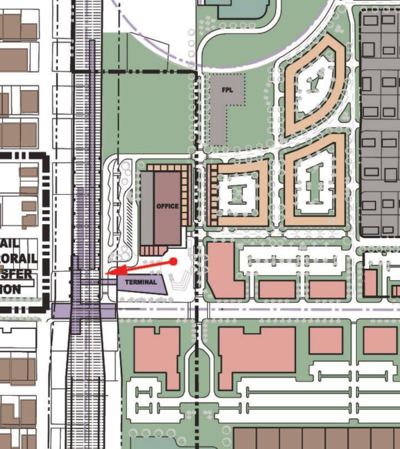 assets
and directing its future. assets
and directing its future.Overview The 79th Street Corridor Sustainable Development Initiative is led by four non-profit organization with substantial expertise in community economic development: The Urban League of Greater Miami, Inc..., Miami-Dade Neighborhood Housing Services, Inc., Dade Employment and Economic Development Corporation (DEEDCO), and the Center for Neighborhood Technology. It draws on the expertise of a Steering Committee which includes individuals representing state and local government, business and community so as to mobilize the expertise necessary for such a challenging project. It is rooted in the local neighborhoods through a broad-based Community Advisory Committee. The 79th Street Corridor in unincorporated Miami-Dade County, despite being the site of major civil disturbances in the 1980's, and despite a history of declining social and economic conditions, has an unprecedented opportunity for sustainable development. It has greater access to jobs, services and amenities by public transportation than any other site in South Florida. Three rail lines intersect at 79th Street: Tri-Rail, which links Miami-Dade, Broward and Palm Beach Counties, MetroRail which provides access within the county, and Amtrak which is a linkage to the rest of the United States. The Initiative will be a model of sustainability, with an integrated approach to neighborhood development that is equally responsive to jobs and to the environment. The project will expand the options for individual residents, improve the community's quality of life, and demonstrate that environmental improvements and economic development can work together to benefit low- and moderate-income people. The Initiative will build on the considerable assets of the community, including tangible assets such as the skills of residents, public transportation, land available for assembly, undervalued market potential, home ownership, job access, rail freight, and rights-of-way, and intangible assets such as the sense of place, knowledge of the community, and location efficiency.  Goals of the Initiative:
The Initiative, initially, will focus on the western end of the
Corridor. A special development district is envisioned which will be a model sustainable
development project based on an integrated approach to neighborhood development.
It is intended to expand the economic options for residents, The Initiative will serve as a catalyst for a new style of neighborhood
development in South Florida that reverses disinvestment and isolation and builds
an environment which addresses the needs of current residents - and their grandchildren. It will seek to receive "credit" for implementing state-of-the-art
techniques which manage stormwater runoff through redesigned streets and open spaces
and through engineered wetlands, reduce energy consumption and improved air quality,
and reduced the need for automobiles. |
 improve the quality
of life and demonstrate that environmental improvement and economic development
can work together to benefit a typical urban community. At a later date, an a second
special development district will be created in the eastern end of the Corridor
("Little Haiti").
improve the quality
of life and demonstrate that environmental improvement and economic development
can work together to benefit a typical urban community. At a later date, an a second
special development district will be created in the eastern end of the Corridor
("Little Haiti").