
Back to Archive Page
Daily Business Review - 10/10/02
Miami architect Bernard Zyscovich says pleasant, stable neighborhoods
can "ascend" by concentrating on quality of life
By Hugo H. Ottolenghi
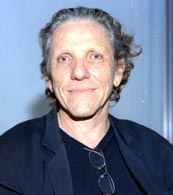 The great architects
whose work set standards - the Frank Lloyd Wrights and I.M. Peis of the world and
even such relative unknowns as Lusby Simpson - see beyond a buildingÆs design
to the way it fits on a street, in a neighborhood or as part of a city.
The great architects
whose work set standards - the Frank Lloyd Wrights and I.M. Peis of the world and
even such relative unknowns as Lusby Simpson - see beyond a buildingÆs design
to the way it fits on a street, in a neighborhood or as part of a city.
Wright designed Fallingwater, the world famous home in Mill Run, Pa., to fit so
completely into its setting by a forested stream that structure and site became
a single composition. The result was named the most important building of the 20th
century by the American Institute of Architects.
PeiÆs design for Johnson ~JohnsonÆs world headquarters was intended
to spark urban redevelopment in New Brunswick, N.J.Æs then shabby downtown.
The cityÆs signature structure has been described as a building within a park,
a park within a city.
And Simpson, the unemployed, Queens, N.Y., architect who designed Bryant Park behind
the New York Public Library on Fifth Avenue, created an oasis with a great lawn,
tree-lined walks and sighing fountains to complement its imposing neighbor.
Bernard Zyscovich, a Miami native and incoming president of AIAÆs local chapter,
has also set his hand to urban design. His firm, Zyscovich Architecture Group, has
created a master plan to turn two blocks of Miami BeachÆs convention center
district into a modern-day Bryant Park. HeÆs also working on revitalization
of MiamiÆs Design District and whatÆs called the 79th Street corridor
in northern Miami.
Zyscovich spoke about the ways architecture impacts South Florida life with real
estate editor Hugo H. Ottolenghi.
You call your view of architecture and planning "Real Urbanism". How
does that contrast with the notion of "New Urbanism" put forth by Andres
Duany and Elizabeth Plater-Zyberk, dean of the University of Miami School of Architecture,
contending that that restoring traditional neighborhood patterns is essential to
restoring functional, sustainable communities.
I call it Real Urbanism because when someone does planning within a city, they need
to take into account not only what it looks like, but how it came to be. The premise
is simple: What we all want as human beings is to have an ever-increasing quality
of life, whatever that means at whatever state in life you are. If you are a poor
person, for example, you want to own your own house one day and to have a more secure
life. Urban life has the potential for that if itÆs done properly. "Properly"
means knowing where you are at and designing a way of life that corresponds to the
characteristics of that place and is not artificial. It needs to be real, and "real"
is diversity and things to do and places to go and creating strong neighborhood
ties and community. I donÆt believe that those things are limited to small
towns. You can have a tremendous sense of community as a New Yorker living in New
York; you can have the same in Tokyo and Kendall. Certain places have a particular
ethnic make-up, certain economic groups. There might be specific understanding regarding
historic buildings or historic preservation, or maybe some archeological feature
or particular kind of business that is prevalent within the neighborhood. Those
kinds of things need to be taken into account to create a place where people will
want to live. The solution in Miami Beach might be different than the solution in
Miami or Hialeah or Homestead.
Are there patterns to these elements and their solutions?
Cities find themselves in three situations: disinvested, stabilized or ascending.
There are examples in our community of all three. Miami Beach went from old people
on the porches, to the Mariel boatlift and the sense of crime and disinvestments,
to moving forward to a point where today itÆs an international city, itÆs
a sustainable environment as an international city. The plan that we just did for
Miami Beach is based upon the question: "How do we prevent a place from coasting?"
Growth in a place thatÆs ascending is primarily oriented toward quality-of-life
issues.
What are the characteristics of a disinvested community?
Places where property values are declining, or at least not growing. Places where
there is a lot of vacant land and abandoned buildings, where job growth and the
economics are not flourishing. Places where there is not a sense of a community
center, where people do not congregate and activate the streets.
For example?
The project we are working on now, the 79th Street corridor, which is west of Miami
and east of Hialeah, that whole swath down to Miami International Airport is disinvested.
How do you distinguish that from a place thatÆs simply poor?
ThatÆs the point. A place thatÆs poor still has the characteristics
of vitality that comes from a community. Up until recently, Wynwood and Little Haiti
were what I characterize as stabilized - not a huge growth in property values, but
also not a decline in values. Buildings are inhabited. There are drugstores, grocery
stores, things like that, which make a living and provide a community service. ItÆs
a place where people say, "IÆve made it. I have a little place to live.
IÆve got a job." ItÆs a very modest way of life that most people
would characterize as poor. But I think that they are stabilized.
Your proposed city center project on Miami Beach would create a geographic heart
from which all sorts of activities would radiate. Does this kind of geographic heart
pump life into the community?
There always needs to be a heart. The heart of Miami Beach is not figuring how do
we get people out of their houses. People are already out on the streets. The question
is, "What can we do for Miami Beach that would raise it to another level?"
The conclusion was that Miami Beach doesnÆt have green space. There is no
center of congregation where there could be a great festival or something happening
at which a large part of the community could congregate.
Is that element essential to an ascending community?
Yes. I was at a City Commission meeting where they were trying to do a dedication
and there was no way the community could participate in some kind of epoch-making
event. The room wasnÆt big enough. You canÆt go to Lincoln Road; you
canÆt go to Collins Avenue; you canÆt go to Flamingo Park because thereÆs
no "there" there. IÆm talking about a higher level of civilization.
Bryant Park in New York was our model.
Why Bryant Park?
ItÆs connected to the New York Public LibraryÆs main branch. It is a
space surrounded by buildings in the city. ItÆs more like a void in the fabric,
a respite within a sea of concrete. ThatÆs what I was thinking for 17th Street.
Like Bryant Park, it would be a place where people congregate, a place to hang,
have a picnic, to listen to music, to have a fashion show ù something that
could be there for the overall community. All those things happen in Bryant Park.
But not all communities can afford or even want something like Bryant Park.
I would not suggest every city begin with that. ItÆs more important to begin
with: "How can I get people who live here to feel like they would be happy
having dinner in their own town rather than getting into a car and going somewhere
else?" In a disinvested city, the question isnÆt, "How do we make
a cultural center? The question is, "How do we get people to come here, to
buy a lot and build a building, even if itÆs a Walgreens?"
What characterizes a stabilized community and where does it go?
A stabilized community has a supermarket and a drugstore and a youth center where
the kids go. ItÆs a perfectly fine environment in which to raise a family.
There need to be things to do without getting into the car. In those communities
you begin to say: "We need to get rid of all these blank blocks where thereÆs
nothing to walk by. We need to get in some shops or figure out a way to get people
in this downtown area to create a bookstore and a coffee shop."
Can a government body create a community, or does it have to happen on its own,
organically? And does such community grow in a planned way or unplanned?
One of things about Real Urbanism is that it has to be authentic. In the old days,
people would settle a place. And there would be enough people living there that
it made business sense for someone to open a general store so people didnÆt
have to go to the next town. ItÆs organic. In this recent incarnation, Miami
Beach grew up like wildflowers. People came, they fixed up buildings, they created
little shops. No one did a full-fledged rehab in Miami Beach in its first 10 years.
All they did was cosmetic stuff. Later on, when there were enough people and the
fashion photography and international models came, suddenly there was a whole other
influence at which point public-private partnerships happen.
How does whatÆs happening in Miami Beach contrast with whatÆs happening
in CityPlace in West Palm Beach?
CityPlace is remarkable because the public-private partnership happened so quickly
and with such scale that itÆs amazing it was built so easily. In that regard,
it was not organic. Maybe if they had built a quarter of CityPlace and focused more
on the housing and then built more of CityPlace, they could probably have done it
in a more organic way. Maybe people would have bought the blocks between CityPlace
and Clematis Street and it would have filled in in a different way.
Does Real Urbanism work for every town? Would it work for Sunrise, which wants
to increase density with a building code requiring a minimum of eight stories for
development at its western edge?
Sunrise has an opportunity, but they have to be really diligent. If theyÆre
going to go out in the countryside, so to speak, and try to develop a more densely
packed environment that will help to create car-free, pedestrian friendly streets,
they will have to be diligent not to let sprawl happen. Part of that should be they
should no longer behave like a suburban community. There needs to be a certain number
of jobs and workplace activities so that people donÆt have to drive to downtown
Fort Lauderdale. Because if there arenÆt those things, itÆs nothing
more than a facade.
What about Coral Gables, with its the new apartments and the revival of Miracle
Mile?
I think the Gables is an excellent example of something more organic. The empty-nesters
decided they donÆt want to have a five-bedroom house and would rather live
closer in. Look at Miracle Mile. ItÆs open at night; itÆs becoming a
real cafe society. The Gables used to shut down at night. ItÆs a classic example
of trying to add more pleasure to their lives. It never would have happened if the
city was just trying to sustain itself. They improved the landscaping along Miracle
Mile; they opened up cafes. It was a community that was stable that wanted to move
to ascending.