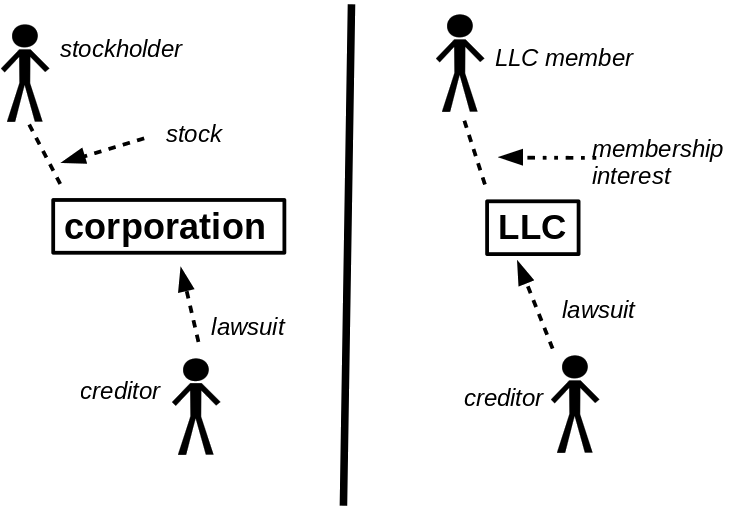
Lawsuit Against Stockholder or LLC Member
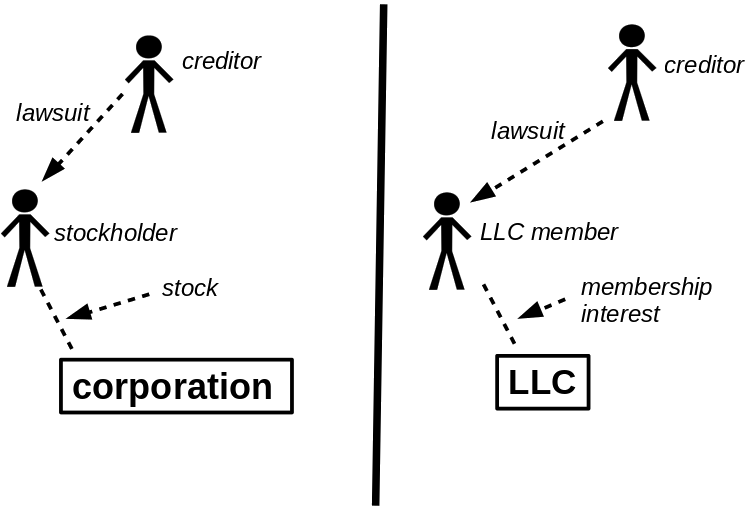
Protecting Owners from
Creditors of the Entity
- LLCs and corporations in all states shield members and stockholders from liabilities owed by the entity
Protecting Entity Assetts
from Creditors of the Owners
- Courts in all states CAN seize corporate stock owned by a judgment debtor
- Thus, for closely held corporations the level of protection provided by Florida and Delaware/Wyoming are the same
- Courts in All states do not allow the seizure of multi-member LLC membership interests owned by judgment debtors (but they can seize LLC distributions made to those owners)
- Thus, for multi-member LLCs the level of protection provided by Florida and Delaware/Wyoming are the same
- Courts in Florida treat single member LLC interests as if they were corporate stock
- Florida Courts can seize single member LLC interests held by a judgment debtor
- Delaware and Wyoming courts treat single member and multimember LLCs the same. Thus, incorporating in those states offer better for assets held by single member LLCs
Summary: Protecting Entity Assets from Creditors of the Owners
- Corporations
- In Florida, Wyoming and Delaware the stock held by a judgment debtor can be seized through the courts just like any other asset owned by the debtor
- Multi-Member LLCs
- In Florida, Delaware and Wyoming interests in multi-member LLC are treated as partnership interests and can't be seized (though distributions can be seized)
- Single-Member LLCs
- Florida treats such single member LLC interests as if they were stock in a corporation which can be seized
- Delaware and Wyoming treat single member LLC interests as partnership interests which can not be seized
INCORPORATING IN STATES LIKE DELAWARE OR WYOMING
WILL BE MORE EXPENSIVE THAN INCORPORATING IN FLORIDA
- Wyoming has a more user friendly on-line incorporation system than does Delaware and some people may not need a lawyer (they would still need a Wyoming registered agent but inexpensive corporate service providers can be found using Google)
- You must pay an annual "franchise tax" to the State of Delaware ($300 per year plus hefty late fees and interest if not timely). - Wyoming has a similar fee but it may be smaller.
- If the Wyoming or Delaware LLC wanted to do business in Florida it would also have to separately pay to register as a "foreign" company with Florida and then pay Florida's annual fee thereafter ($138.75 per year)
INCORPORATING IN DELAWARE OR WYOMING MIGHT NOT
PROVIDE DESIRED PROTECTION AFTER ALL
- It is unclear how Florida courts will treat foreign single member LLCs with assets in Florida where the protections afforded to the members of those LLCs under Delaware law are being used (arguably) to thwart the interests of the member's Florida creditors.
SOLUTIONS FOR A FLORIDA LLC?
- Try gaming the system to make an entity appear as if were a multi-member LLC by having a second member with only a minuscule share of the ownership rights & profits with no say in management.
- The law is still relatively new and it is hard to predict if a Florida court would honor such a structure
- Click Here to view template for multi-member LLC Operating Agreement (manager managed)
- Click Here to view template for single-member LLC Operating Agreement
GENERAL ADVICE TO CLIENTS
ABOUT LLCs
- ACTUALLY OPERATE THE BUSINESS THROUGH THE LLC: To maintain limited liability the LLC must be more than a piece of paper filed in Tallahassee. The business should actually operate only through the LLC. All sales and contracts should be in the name of the LLC and not in the name of the LLCs owners (members). All monetary receipts and payments related to the business should be done solely throught the LLCs bank account(s).
- SEPARATE BANK ACCOUNT. It is important that there be a separate bank account opened in the name of the LLC. The business of the LLC must be kept legally distinct from the business of the owners ("members"). The members of the LLC should never directly pay debts owed by the LLC using a personal check or credit card. If the LLC needs money to pay a bill, the members can deposit their personal funds into the LLC's bank account so the LLC can then make the payment.
- ADOPT AN OPERATING AGREEMENT. LLCs are essentially partnerships that enjoy limited liability protection similar to a corporation except that partners are called "members" and the partnership agreement is called an "operating agreement". If the LLC has more than one member a written operating agreement is recommended. It would govern such issues as management, split of profits, percentage of ownership, etc. Even though a new LLC might have only one "member" it is still a good idea to have an Operating Agreement. Lenders and banks often expect to see an Operating Agreement when an LLC wants to open an account or take out a loan.
- EMPLOYER IDENTIFICATION NUMBER (EIN). The EIN is an official identification number for an entity designated by the IRS. You can apply for the EIN on-line (it's free). Go to the IRS website (irs.gov) and in the search bar at the top of the page type "EIN". After finding the link click it to go to the application page. Upon completion of the on-line application a PDF letter from the IRS is instantly generated by your computer stating what the EIN is (print it).
- ANNUAL REPORT FILED WITH STATE. You will be required to file an "Annual Report" with State on yearly basis to maintain “active” status. The filing is done on-line through the state's Sunbiz.org website. The first such Annual Report must be filed between January 1st and May 1st of the year FOLLOWING the year that you first incorporated (mark this on you calendar since the State may or may not email a reminder to you). Along with the Annual Report you will be required to pay an annual fee of $138.75. If you file the Annual Report late the fee jumps to $400. If you don't file by mid September of that year your LLC will be "administratively dissolved" by the State.
- TAXES. Taxes for an LLC can be tricky. It is highly recommended that you consult with an accountant familiar with the taxation of LLCs.
- CORPORATE TRANSPARENCY ACT. Effective January 1, 2024,virtually every legal entity in the United States (with a handful of exceptions) MUST disclose information about it's owners, officers, and controlling persons. The disclosures must be made to a federal agency known as the Financial Crimes Enforcement Network. Click the follow link for information: